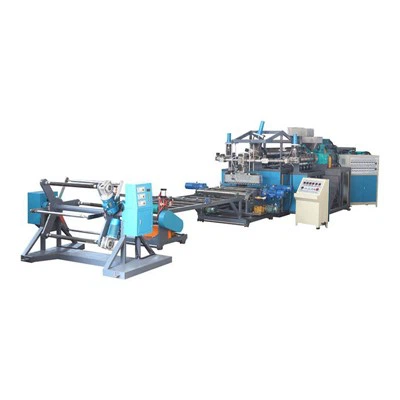
In the dynamic and ever - evolving world of manufacturing, the demand for high - quality plastic sheets with specific properties is on the rise. One of the most sought - after characteristics in plastic sheets is high chemical resistance. As a leading sheet extruder supplier, we often get asked: Can a sheet extruder produce sheets with high chemical resistance? In this blog, we will delve into this question, exploring the capabilities of our sheet extruders and the factors that influence the production of chemically resistant sheets.
Understanding Chemical Resistance in Plastic Sheets
Chemical resistance refers to a material's ability to withstand the action of chemicals without significant degradation. This property is crucial in various industries, such as chemical processing, food packaging, and automotive, where plastic sheets may come into contact with a wide range of substances. For example, in chemical processing plants, plastic sheets need to resist corrosive acids and alkalis. In food packaging, they must be resistant to oils, fats, and various food additives.
The Role of Sheet Extruders in Producing Chemically Resistant Sheets
A sheet extruder is a machine that melts and forms plastic materials into sheets of various thicknesses and widths. Our Sheet Extrusion Line is designed to handle a variety of plastic resins, some of which inherently possess high chemical resistance.
Selecting the Right Resin
The choice of resin is the first and most critical step in producing chemically resistant sheets. Some plastics, such as polyvinyl chloride (PVC), polypropylene (PP), and polyethylene (PE), have different levels of chemical resistance. For instance, PVC is known for its excellent resistance to many acids, alkalis, and salts. Polypropylene, on the other hand, has good resistance to organic solvents and is often used in applications where contact with oils and greases is expected.
Our Ps Foam Sheet Extruder Machine can process polystyrene (PS) foam sheets. PS can be formulated to have a certain degree of chemical resistance, especially when it comes to resistance to non - polar solvents.
Extrusion Process Optimization
The extrusion process itself also plays a vital role in ensuring the chemical resistance of the final product. During extrusion, factors such as temperature, pressure, and screw speed need to be carefully controlled. If the temperature is too high, it may cause the resin to degrade, reducing its chemical resistance. Similarly, improper pressure and screw speed can lead to uneven distribution of the resin, resulting in weak spots in the sheet that are more susceptible to chemical attack.
Our Plastic Sheet Extrusion Machine is equipped with advanced control systems that allow for precise adjustment of these parameters. This ensures that the sheets produced have consistent quality and optimal chemical resistance.


Factors Affecting Chemical Resistance in Extruded Sheets
Additives and Fillers
Additives and fillers can be incorporated into the resin during the extrusion process to enhance chemical resistance. For example, antioxidants can prevent the oxidation of the plastic when exposed to certain chemicals, while UV stabilizers can protect the sheet from degradation caused by sunlight and some chemicals. Fillers such as glass fibers or talc can improve the mechanical properties of the sheet, which in turn can enhance its chemical resistance by making it more resistant to physical damage that could lead to chemical penetration.
Surface Treatment
Surface treatment can also improve the chemical resistance of extruded sheets. Techniques such as corona treatment or plasma treatment can modify the surface properties of the sheet, making it more resistant to chemical attack. These treatments can increase the surface energy of the sheet, which can improve its adhesion to coatings or other protective layers.
Case Studies: High - Chemical - Resistance Sheet Production
Let's take a look at some real - world examples of how our sheet extruders have been used to produce sheets with high chemical resistance.
In the chemical processing industry, a client needed a plastic sheet that could withstand the corrosive effects of sulfuric acid. We recommended using a PVC resin and optimized the extrusion process to ensure the sheet had a uniform thickness and high density. The resulting sheet was able to resist the sulfuric acid for an extended period, meeting the client's requirements.
In the food packaging industry, another client required a plastic sheet that was resistant to fats and oils. We used a polypropylene resin and added appropriate additives to enhance its chemical resistance. The sheet produced was not only resistant to fats and oils but also met the food - contact safety standards.
Meeting Industry Standards
Producing sheets with high chemical resistance also requires compliance with various industry standards. For example, in the food packaging industry, sheets must meet the regulations set by the Food and Drug Administration (FDA) in the United States. Our sheet extruders are designed to produce sheets that meet these standards, ensuring that our clients can use our products with confidence.
Our Commitment to Quality and Innovation
As a sheet extruder supplier, we are committed to providing our clients with the highest - quality products. We invest in research and development to continuously improve our extrusion technology and develop new materials with enhanced chemical resistance. Our team of experts is always available to provide technical support and advice to our clients, helping them choose the right resin and extrusion process for their specific applications.
Contact Us for Your Sheet Extrusion Needs
If you are in the market for plastic sheets with high chemical resistance, we invite you to contact us. Our experienced sales team can provide you with detailed information about our products and services, and help you find the best solution for your needs. Whether you need a custom - made sheet or a standard product, we have the expertise and technology to meet your requirements.
References
- "Plastics Extrusion Technology" by Hanser Publishers
- "Handbook of Plastic Materials and Technology" by Donald R. Paul and Charles B. Bucknall