


Extrusion Machine
The Extrusion Machine Manufacturer!
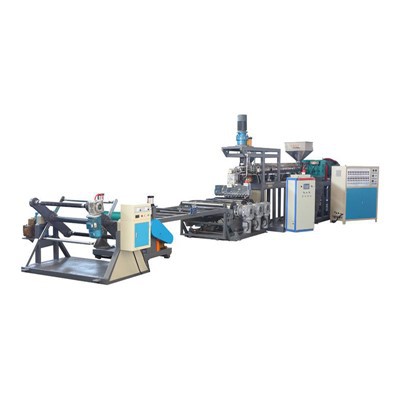
Ruian Shuoguo Machinery Co., Ltd. it has been committed to the research and development and manufacturing of plastic sheet machines, plastic thermoforming machines and cup lid machines.




Why choose us
Precision Control
You will never have to worry about the quality or consistency of your pipes with our advanced control systems that offer accurate control over the extrusion process.
Sales Market
Our customers in Spain, Turkey, Iraq, Hungary, Egypt, Brazil, Indonesia, Mexico, Argentina, Ecuador, UAE, Gulf countries, the Africa market, and more than 60 countries.
Our Certification
Ruian Shuoguo Machinery Co., Ltd. technology of plastic extrusion and guarantee high-quality production under the standard of CE or UL certification, IS09001, and 2008 quality management system certification.
Key Performance Parameters of Extrusion Machines
|
Parameter |
Description |
Impact on Production |
|
Screw Diameter (mm) |
25–300 mm typical range |
Determines throughput capacity |
|
L/D Ratio (Length-to-Diameter) |
20:1 to 40:1 |
Affects plasticizing quality |
|
Screw Speed (rpm) |
10–300 rpm |
Higher speed = higher output |
|
Output Capacity |
kg/h or m/min |
Production rate |
|
Heating/Cooling System |
Electrical heaters, air or water cooling |
Temperature control |
|
Die Design |
Shape and flow channels |
Determines final product geometry |
|
Temperature Accuracy |
±1–2°C |
Critical for quality control |
|
Motor Power (kW) |
10–400 kW |
Defines energy efficiency |
|
Torque and Pressure |
Measured in Nm or MPa |
Material flow consistency |
|
Control System |
PLC, HMI, servo system |
Automation and precision |
Benefits of Using Extrusion Machines

Efficiency and Productivity
Extrusion machines allow for continuous production, resulting in high output rates and efficient use of materials. This efficiency is unparalleled when compared to other molding processes, providing manufacturers with a substantial boost in productivity.

Consistency and Quality
With precise control mechanisms, extrusion machines ensure product uniformity. This consistency is crucial, especially for industries that require high standards for their plastic parts, such as the medical or automotive sectors.

Cost-effectiveness
The extrusion process minimises waste since excess materials can often be recycled and reintroduced into the system. Also, due to the continuous nature of the process, it involves less labor compared to other manufacturing methods, offering cost savings to producers.

Flexibility
By changing the dies or applying various post-extrusion modifications, a single extrusion machine can produce an extensive range of products, offering businesses the flexibility to adapt to changing customer needs and market trends.
Key Components of an Extrusion Machine
Hopper
It is the entry point where raw materials are loaded.
Screw and Barrel
The screw rotates to melt and transport materials within the barrel.
Die
This component shapes the molten material into the desired profile.
Cooling System
Vital for solidifying the extruded product into a stable form.
Types of Extrusion Machines
Single-Screw Extruders: These are the most common type of extrusion machines. A single-screw extruder consists of one screw rotating inside a heated barrel. As the screw turns, it transports, melts, and mixes the material, which is then forced through a die to form the desired shape. Single-screw extruders are widely used in the plastics industry for making products like pipes, films, and sheets.
Twin-Screw Extruders: Twin-screw extruders have two screws rotating inside the barrel, providing better mixing and heat transfer. They can operate in co-rotating or counter-rotating modes, depending on the application. Twin-screw extruders are ideal for processing complex formulations, including those that require mixing, compounding, or chemical reactions. They are commonly used in food processing, pharmaceuticals, and plastics.
Co-Extruders: Co-extrusion involves using multiple extruders to combine two or more materials into a single product with distinct layers. This technique is often used in the packaging industry to create multi-layered films or sheets with various properties, such as barrier layers or decorative coatings.
Blown Film Extruders: These extruders are specifically designed for producing thin plastic films. The process involves extruding a tube of molten plastic and inflating it into a bubble, which is then cooled and flattened to form a film. Blown film extrusion is widely used for making packaging materials like bags and plastic wrap.
Sheet Extruders: Sheet extrusion involves producing flat sheets of plastic, which can be further processed into products like trays, containers, and automotive parts. The extruded sheet is cooled and then cut to the desired size.
Profile Extruders: Profile extrusion is used to create products with complex cross-sectional shapes, such as window frames, door seals, and decorative moldings. The process involves forcing the material through a die that shapes it into the desired profile.
Food Extruders: In the food industry, extruders are used to process dough-like materials into various shapes and textures. This includes products like snacks, breakfast cereals, and pet food. Food extruders can also be used for cooking and sterilizing food products.
Applications of Extrusion Machine
Plastic Industry
Manufacturing pipes, sheets, films, profiles, and cables.
01
Food Industry
Producing snacks, breakfast cereals, pasta, and other food items.
02
Automotive Industry
Creating parts such as seals, gaskets, and trim pieces.
03
Medical Field
Making items like catheters, tubes, and specialized medical equipment.
04
Construction Industry
Producing building materials like window frames, roofing materials, and flooring.
05
Packing Details
We will packing by professional export packing,safety against breakage, finally into the wooden cases/ carton/pallet or customized package.

Delivery Details
We can deliver by SEA,air,rail transportation,the China-Europe Railway Express etc.
TNT, DHL,UPS, FEDEX, EMS,S.F EXPRESS etc.
FAQ