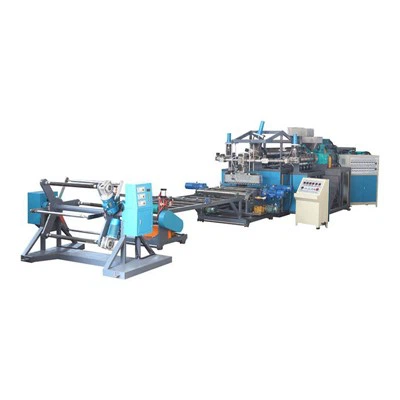
As a supplier of single screw extruders, I understand the critical role that mixing plays in the extrusion process. Achieving a high - quality mixing effect is essential for producing consistent, high - performance products. In this blog, I will share some effective strategies to improve the mixing effect of a single screw extruder.
Understanding the Basics of Single Screw Extruder Mixing
Before delving into the improvement methods, it's important to understand how a single screw extruder works for mixing. The single screw extruder consists of a screw rotating within a barrel. As the screw turns, it conveys the material forward while also applying shear forces to mix the components. The mixing mechanism mainly relies on shear mixing, which involves the deformation and rearrangement of the material particles.


1. Optimize Screw Design
The screw is the heart of the single screw extruder, and its design significantly affects the mixing effect.
- Screw Geometry: Different screw geometries have different mixing capabilities. For example, a screw with a high compression ratio can generate more shear forces, which is beneficial for mixing materials with high viscosity. A barrier screw design can separate the solid and molten phases more effectively, enhancing the mixing process. By adjusting the pitch, flight depth, and helix angle of the screw, we can optimize the flow pattern of the material and improve the mixing efficiency.
- Screw Length - to - Diameter Ratio (L/D): A larger L/D ratio provides more residence time for the material in the extruder, allowing for better mixing. However, increasing the L/D ratio also increases the cost and energy consumption. Therefore, a balance needs to be struck based on the specific material and production requirements.
2. Control Processing Parameters
The processing parameters of the single screw extruder have a direct impact on the mixing effect.
- Screw Speed: Increasing the screw speed can increase the shear rate, which is beneficial for mixing. However, too high a screw speed may cause excessive heat generation, which can degrade the material. Therefore, the screw speed should be optimized according to the material properties and the desired mixing effect.
- Barrel Temperature: The barrel temperature affects the viscosity of the material. A proper temperature can ensure that the material has good flowability and is easier to mix. Different materials have different optimal temperature ranges. For example, polymers with high melting points require higher barrel temperatures.
- Feed Rate: The feed rate should be stable and appropriate. An unstable feed rate can lead to uneven mixing. If the feed rate is too high, the material may not have enough time to be fully mixed; if it is too low, the production efficiency will be affected.
3. Material Selection and Preparation
The properties of the materials used also play a crucial role in the mixing effect.
- Material Compatibility: Ensure that the materials to be mixed are compatible with each other. Incompatible materials may not mix well, resulting in poor product quality. For example, some polymers may have different polarities, which can lead to phase separation during mixing.
- Pre - mixing: Pre - mixing the materials before feeding them into the extruder can improve the initial dispersion of the components. This can be done using a high - speed mixer or other mixing equipment. Pre - mixing can reduce the mixing time in the extruder and improve the overall mixing effect.
4. Use of Mixing Elements
In addition to the basic screw design, additional mixing elements can be installed in the extruder to enhance the mixing effect.
- Static Mixers: Static mixers are non - moving devices that are installed in the extruder barrel or die. They work by dividing and recombining the material flow, which promotes better mixing. Static mixers can be especially effective for materials that are difficult to mix.
- Mixing Sections: Some single screw extruders are equipped with special mixing sections on the screw. These sections are designed to increase the shear and elongation forces acting on the material, improving the mixing efficiency.
5. Regular Maintenance and Inspection
Proper maintenance and inspection of the single screw extruder are essential for maintaining a good mixing effect.
- Cleaning: Regularly clean the extruder barrel and screw to remove any residual material. Residual material can accumulate over time and affect the mixing performance.
- Wear Inspection: Check the wear of the screw and barrel regularly. Worn parts can reduce the mixing efficiency and may even cause product quality problems. Replace the worn parts in a timely manner.
Our Product Offerings
As a single screw extruder supplier, we offer a range of high - quality extruders suitable for various applications. Our Floor Mat Forming Machine is designed to produce high - quality floor mats with excellent mixing performance. The Tpu Extrusion Machine is ideal for processing TPU materials, ensuring uniform mixing and high - quality product output. And our Tpe Extruderline is capable of handling TPE materials with efficient mixing and extrusion.
Contact Us for Purchase and Consultation
If you are interested in improving the mixing effect of your single screw extruder or are looking for a high - quality single screw extruder for your production needs, please feel free to contact us. Our team of experts is ready to provide you with professional advice and solutions. We can help you select the most suitable extruder and optimize the mixing process to meet your specific requirements.
References
- Tadmor, Z., & Gogos, C. G. (2006). Principles of Polymer Processing. Wiley - Interscience.
- Rauwendaal, C. (2014). Polymer Extrusion. Hanser Publishers.