


Twin Screw Extruder
The Twin Screw Extruder Manufacturer!
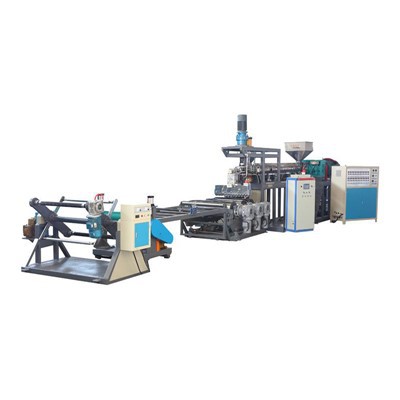
Ruian Shuoguo Machinery Co., Ltd. it has been committed to the research and development and manufacturing of plastic sheet machines, plastic thermoforming machines and cup lid machines.


Why choose us
Precision Control
You will never have to worry about the quality or consistency of your pipes with our advanced control systems that offer accurate control over the extrusion process.
Sales Market
Our customers in Spain, Turkey, Iraq, Hungary, Egypt, Brazil, Indonesia, Mexico, Argentina, Ecuador, UAE, Gulf countries, the Africa market, and more than 60 countries.
Our Certification
Ruian Shuoguo Machinery Co., Ltd. technology of plastic extrusion and guarantee high-quality production under the standard of CE or UL certification, IS09001, and 2008 quality management system certification.
Advantages of Twin Screw Extruders

Improved Mixing
The intermeshing design of the screws ensures more efficient and thorough mixing of materials. This is particularly important in applications where additives or colourants are used.

Greater Flexibility
Twin screw extruders can handle a wider range of materials, including those that are difficult to process with a single screw extruder. They are also better suited for processing materials with varying viscosities.

Higher Output
Due to their design, twin screw extruders typically offer higher output rates, making them ideal for large-scale production environments.

Consistent Quality
The ability to precisely control the processing conditions within the extruder leads to more consistent product quality, reducing the likelihood of defects or variations.
Application Areas of Twin Screw Extruder
Plastic processing
It is widely used in the field of plastic processing, where it can be used to produce plastic pipes, plastic films, plastic profiles, plastic sheets, and other products.
Rubber processing
It can also be used in the rubber processing industry to produce rubber pipes, rubber sheets, rubber profiles, and other products.
Chemical fiber processing
It has a wide range of applications in the chemical fiber processing industry, where it can be used to produce chemical fibers, chemical fiber fabrics, and other products.
Other areas
In addition to the above-mentioned fields, extruders can also be applied in construction materials, packaging, automotive components, and other fields.
Basic Components of a Twin Screw Extruder Machine
Connector
Connectors in a twin screw extruder are used to link various parts of the machine, ensuring seamless communication and operation between different sections. They are essential for assembling the extruder and may facilitate the transfer of materials, electrical signals, or mechanical forces.
Filter
The filter, typically located near the die, is used to remove any impurities or contaminants from the molten material before it exits the extruder. This ensures the final product is of high quality and free from defects. Filters can also protect the die and downstream equipment from damage caused by foreign particles.
Barrel
The barrel is the cylindrical housing that contains the screws. It supports the screws and provides a controlled environment for material processing. The barrel is typically heated to melt the material and may have cooling sections to control the temperature during extrusion.
Screws
There are various types of screw structures in twin screw extruders, classified based on different screw configurations and whether the screws intermesh. According to the composition of the screw's threaded sections and the shape of the screws, there are several types as well.
Heater
Heaters are installed along the barrel to provide the necessary thermal energy to melt the material being processed. Precise temperature control is crucial for ensuring proper melting, mixing, and flow of the material. Heaters can be electric, oil, or steam-based.
Feeder
The feeder, also known as the feed hopper, is where raw materials are introduced into the extruder. It ensures a consistent and controlled supply of material to the screws.The feeder hopper and feeding mechanisms make up the feeding system. The hopper holds the material, while the feeding mechanisms ensure a consistent and controlled supply of material to the screws.
Support
Supports are structural components that provide stability and alignment to the extruder. They ensure that the machine operates smoothly and that all components are held in their correct positions, minimizing vibrations and mechanical stresses.
Thrust Bearing
Thrust bearings are used to support axial loads exerted by the screws. They absorb the axial force generated during the extrusion process, preventing damage to the screws and other mechanical components. This extends the life of the machine and maintains efficient operation.
Gearbox
The gearbox, or reducer, reduces the speed of the motor to the optimal level required by the screws. It also increases the torque, enabling the screws to handle the viscous material effectively. Gearboxes ensure smooth and synchronized rotation of the screws.
Motor
The motor provides the mechanical power necessary to drive the screws. It converts electrical energy into rotational motion. The motor's speed and torque can be adjusted to match the requirements of different materials and processing conditions.
Types of Twin Screw Extruders
Co-rotating means that both screws rotate in the same direction, delivering outstanding dispersive and distributive mixing. This makes co-rotating extruders the preferred choice for demanding mixing and compounding applications such as polymer compounding, nanocomposites, pharmaceutical hot-melt extrusion, food texturization, and bio-based polymer processing.
In counter-rotating twin screw extruders, the screws turn in opposite directions. This generates strong conveying forces while applying lower shear between the screw flights, making them especially well-suited for processing shear-sensitive materials. Counter-rotating designs are widely preferred for shaping operations, including PVC compounding, pipe and profile extrusion, cable coatings, and both rigid and flexible sheet production.
With parallel screw extruders, the screws maintain a constant diameter along their length, making them ideal for compounding, research, and high-throughput applications. In contrast, conical screw extruders feature screws that taper toward one end, providing enhanced feeding capability that is well-suited for high-viscosity or bulkier materials. Many conical systems will feature a recirculation chamber to allow a simulation of different L/D ratios.
Packing Details
We will packing by professional export packing,safety against breakage, finally into the wooden cases/ carton/pallet or customized package.

Delivery Details
We can deliver by SEA,air,rail transportation,the China-Europe Railway Express etc.
TNT, DHL,UPS, FEDEX, EMS,S.F EXPRESS etc.
FAQ