


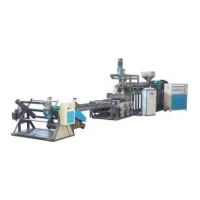

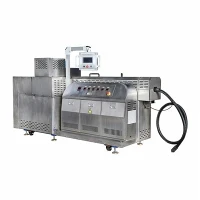

Plastic Food Container Thermoforming Machine
The Plastic Food Container Thermoforming Machine converts continuous plastic sheet into food containers through feeding, heating, forming, cutting and stacking. It processes PP, PS, PET and HIPS sheet for takeaway boxes, meal containers, food trays, lids and similar packaging. Machine configuration is matched to product dimensions, sheet thickness, forming depth, forming area, cavity layout and required output. A product drawing or sample can be reviewed before production to confirm the forming area, mold layout and processing configuration.
Production Process
Sheet Feeding
Continuous sheet enters the forming line at a controlled feeding rate. Sheet width and thickness are matched to the forming and cutting area.
Heating
The sheet passes through multiple heating zones. Temperature settings are adjusted according to material type and sheet thickness.
Forming
The heated sheet is shaped in the mold according to the container profile, forming depth and cavity arrangement.
Cutting & Stacking
Formed containers are separated from the sheet after forming and transferred to the stacking section for organized collection.
Suitable Materials
PP Sheet
Suitable for meal boxes, food containers, trays and other rigid packaging products.
PS and HIPS Sheet
Suitable for disposable food containers and formed tray products.
PET Sheet
Suitable for food packaging requiring clear or transparent sheet.
Container Types
Food Containers
For takeaway boxes, meal containers and compartment food packaging.
Food Trays
For prepared food, produce and other shallow tray applications.
Lids
For formed lids matched to the container dimensions and mold arrangement.
Clamshell Packaging
Suitable for hinged packaging when the product geometry and mold structure meet the forming requirements.
Key Production Benefits
Continuous Processing
Feeding, heating, forming, cutting and stacking are arranged in one production sequence for continuous material handling.
Product-Based Setup
Forming area, cavity layout and mold dimensions are selected according to the actual container size and production requirement.
Multi-Zone Heating
Heating zones provide separate temperature settings for different sheet sections and material conditions.
Automatic Stacking
Finished containers are transferred to the stacking section after cutting for organized product collection.
Technical Specifications
|
Parameter |
Reference Configuration |
|
Suitable Materials |
PP / PS / PET / HIPS |
|
Sheet Thickness |
0.20–2.00 mm |
|
Maximum Forming Area |
700 × 550 mm |
|
Maximum Forming Depth |
120 mm |
|
Maximum Sheet Width |
750 mm |
|
Forming Speed |
Up to 30 cycles/min |
|
Air Pressure |
0.60–0.80 MPa |
|
Power Supply |
380 V / 50 Hz / 3 Phase |
|
Production Process |
Forming / Cutting / Stacking |
Forming & Mold Configuration
Forming Area
The forming area determines the available space for product cavities within each cycle and sets the working range for the mold layout.
Cavity Layout
Cavity quantity is calculated from product dimensions, forming area and cutting space. The layout also affects pieces produced per cycle.
Forming Depth
Container height and draw depth affect material stretching, heating conditions and mold configuration. Product drawings or samples help confirm the required depth.
Production Output Factors
Product Size
Container length and width determine how many cavities can fit within the forming area.
Sheet Thickness
Thicker sheet requires different heating and forming conditions, which can change the cycle time.
Cavity Quantity
The number of cavities determines the number of products formed in each cycle within the available mold area.
Material
PP, PS, PET and HIPS have different forming characteristics. Material type and sheet thickness are therefore considered together when evaluating output.
Applications
The machine is suitable for:
Disposable food containers
Takeaway meal boxes
Lunch boxes
Food trays
Fruit and produce trays
Food container lids
Shallow bowls
Compartment containers
Hinged food packaging
Customization & Project Confirmation
Machine configuration can be adjusted to the product and production requirements.
Product Data
Provide product length, width, height, forming depth and a product drawing or sample.
Sheet Data
Provide the material type and sheet thickness. Sheet width can be confirmed during configuration.
Output Requirement
Required output and cavity quantity are used to determine the forming and cutting arrangement.
Factory Conditions
Power supply and compressed-air conditions can be checked before final configuration.
FAQ
Hot Tags: plastic food container thermoforming machine, China plastic food container thermoforming machine manufacturers, suppliers, factory, automatic molding machine, horizontal molding machine, industrial molding unit, injection press machine, PVC molding machine, semi automatic molding machine
Next
No InformationYou Might Also Like


Send Inquiry