


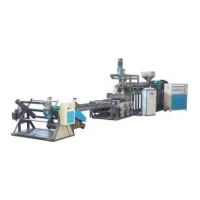

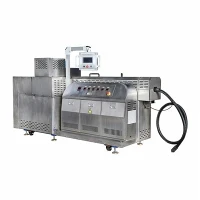

Plastic Disposable Tableware Thermoforming Machine
The Plastic Disposable Tableware Thermoforming Machine converts continuous plastic sheet into disposable plates, bowls, trays and food containers through feeding, heating, forming, cutting and stacking. It processes PP, PS, PET and HIPS sheets according to the selected configuration. Machine selection is based on product dimensions, sheet thickness, forming depth, forming area, cavity layout and required output. A product drawing or sample can be reviewed before production to confirm the forming area, mold layout and process configuration.
Production Process
Sheet Feeding
Continuous sheet is fed into the heating section with controlled positioning for stable transfer through the forming cycle.
Heating
The sheet is heated according to its material, thickness and forming requirements before entering the forming station.
Forming and Cutting
The heated sheet is shaped by the selected mold and then separated according to the product geometry and cavity layout.
Stacking
Finished products are counted and stacked after cutting for collection, inspection and packing.
Suitable Materials
PP Sheet
Suitable for plates, bowls, trays and food containers requiring the material characteristics of polypropylene.
PS Sheet
Suitable for disposable plates, bowls, trays and lightweight food-service products.
PET Sheet
Suitable for selected food packaging and tableware products where sheet clarity and appearance are required.
HIPS Sheet
Suitable for rigid disposable containers, trays and tableware requiring greater structural stiffness.
Key Product Benefits
Product-Matched Forming
Forming area, mold dimensions and machine configuration are selected according to the finished product.
Flexible Cavity Layout
Cavity quantity and arrangement can be matched to product size, available forming area and required output.
Integrated Production
Feeding, heating, forming, cutting and stacking are arranged within one continuous production process.
Output-Based Configuration
Production output is evaluated from cycle speed, cavity quantity and products produced per cycle.
Technical Specifications
|
Parameter |
Reference Technical Configuration |
|
Suitable Materials |
PP / PS / PET / HIPS |
|
Sheet Thickness |
0.2–2.0 mm |
|
Maximum Forming Area |
700 × 500 mm |
|
Maximum Forming Depth |
120 mm |
|
Forming Speed |
30 cycles/min |
|
Maximum Sheet Width |
730 mm |
|
Air Pressure |
0.6–0.8 MPa |
|
Air Consumption |
3.6 m³/min |
|
Water Consumption |
0.7 m³/h |
|
Power Supply |
AC 380 V / 50 Hz / 3 Phase |
|
Process |
Forming / Cutting / Stacking |
Product and Mold Selection
Product Dimensions
Plate diameter, bowl diameter, tray length, width and height determine the required forming area and mold dimensions.
Forming Depth
Product height and geometry determine the required forming depth and influence material distribution during forming.
Cavity Quantity
Cavity quantity determines the number of products produced per cycle and must match the available forming area.
Sheet Thickness
Sheet thickness affects heating requirements, forming conditions and finished product rigidity.
Tableware Applications
Plates and Bowls
Suitable for disposable plates, round bowls and shaped food-service tableware.
Food Trays
Suitable for meal trays, compartment trays, snack trays, bakery trays and fruit trays.
Food Containers
Suitable for takeaway containers, meal containers and other thermoformed food packaging products.
Custom Tableware
Product-specific molds can be configured for different dimensions, shapes, cavity layouts and forming depths.
Production Configuration
Forming Station
The forming station is matched to the mold dimensions, product geometry and required forming depth.
Cutting Station
Cutting configuration follows the product edge, cavity arrangement and finished part layout.
Stacking Station
Stacking settings are selected according to product shape, cavity quantity and collection requirements.
Factory Utilities
Electrical supply, compressed air, cooling water and installation space are confirmed during final machine configuration.
Custom Machine Configuration
Product Data
Product drawings, samples, dimensions and forming depth provide the basis for machine and mold selection.
Material Data
Material type and sheet thickness determine the required heating and forming conditions.
Production Target
Required output is evaluated together with cavity quantity, cycle speed and mold layout.
Factory Conditions
Electrical standard, compressed air, cooling water and available installation space are included in the final configuration.
Quality Control
Component Inspection
Mechanical and electrical components are checked against the approved machine configuration before assembly.
Assembly Inspection
Feeding, heating, forming, cutting and stacking mechanisms are checked during machine assembly.
Trial Operation
Machine operation can be tested with the specified material and mold configuration before shipment to verify the production process.
Technical Support and Warranty
Warranty
The machine is supplied with a one-year warranty covering the agreed equipment scope.
Remote Support
Technical assistance is available for operating instructions, parameter adjustment and troubleshooting.
On-Site Service
On-site technical service can be arranged when inspection or maintenance is required at the installation location.
FAQ
Hot Tags: plastic disposable tableware thermoforming machine, China plastic disposable tableware thermoforming machine manufacturers, suppliers, factory, automated molding machine, CNC molding machine, high pressure molding machine, industrial plastic injection unit, molding process equipment, Plastic Bowl Thermoforming Machine
You Might Also Like


Send Inquiry