




PS Foam Thermoforming Sheet Extrusion Line
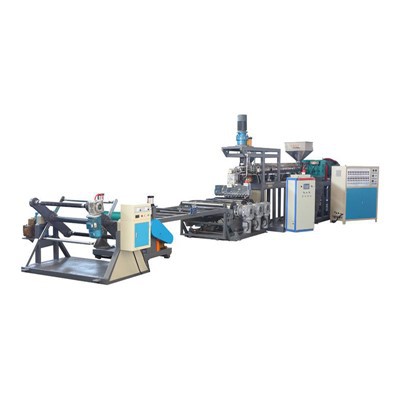
The PS Foam Thermoforming Sheet Extrusion Line produces continuous polystyrene foam sheet for thermoformed food containers, trays, bowls, takeaway packaging, and disposable tableware. The line covers material feeding, plasticizing, foaming, melt filtration, die extrusion, cooling and calibration, traction, and winding. Configuration is selected according to PS material, sheet dimensions, foaming ratio, required output, and downstream forming requirements.
Production Process
Material Feeding
PS material enters the extrusion system at a controlled rate matched to the required production capacity and material specification.
Plasticizing and Foaming
The material is plasticized before the foaming stage. Melt temperature, pressure, and foaming conditions affect the density and structure of the finished sheet.
Extrusion and Cooling
The foamed melt passes through the die and enters the cooling and calibration section. This stage establishes the required sheet thickness, width, surface condition, and dimensional stability.
Traction and Winding
Controlled traction moves the sheet through the production line before the finished material is wound into rolls for subsequent thermoforming.
Key Advantages
Thermoforming-Oriented Production
Sheet specifications can be matched to the heating, forming area, product dimensions, and forming depth required by the downstream process.
Continuous Sheet Output
The extrusion process provides a continuous material supply for thermoforming production with defined sheet dimensions.
Controlled Foam Structure
Foaming conditions are selected according to the required sheet density, thickness, and finished-product requirements.
Flexible Capacity
Reference configurations cover 70–400 kg/h, allowing line capacity to be selected according to sheet specifications and production requirements.
Technical Specifications
|
Parameter |
Reference Specification |
|
Material |
PS |
|
Output |
70–400 kg/h |
|
Sheet Thickness |
0.8–5.0 mm |
|
Sheet Width |
480–1,400 mm |
|
Production Type |
Continuous extrusion |
|
Product Form |
Foam sheet roll |
|
Downstream Process |
Thermoforming |
|
Configuration |
Customized |
How to Select the Line
Production Capacity
Start with the hourly sheet requirement of the forming process. Required output should be assessed together with sheet thickness, width, product dimensions, and production schedule.
Sheet Dimensions
Sheet width and thickness should correspond to the forming area, cavity arrangement, product size, and usable material area.
Foaming Ratio
Foaming ratio should be considered together with sheet thickness, product structure, forming depth, and the required characteristics of the finished product.
Formed Product
The final product provides the main reference for sheet selection. Product dimensions and forming conditions determine the required material format and production capacity.
Thermoforming Compatibility
The extrusion line is configured around the requirements of the subsequent thermoforming process. Sheet thickness influences heating time and material distribution during forming. Foam structure affects density, weight, and forming behavior. Sheet width needs to match the forming layout and usable forming area. Considering these factors together helps establish a practical relationship between sheet production and thermoforming capacity.
Applications
Food Containers
PS foam sheet can be thermoformed into disposable food containers for takeaway and food-service applications.
Trays and Bowls
The material can be formed into trays, bowls, and similar packaging products according to the selected sheet specification.
Disposable Tableware
Applications include disposable plates, bowls, food containers, and related thermoformed tableware.
Packaging Components
PS foam sheet can be processed into formed packaging components where lightweight foam construction is required.
Process Control
Melt Conditions
Plasticizing temperature, melt pressure, and material flow affect the consistency of the foamed melt entering the die.
Foam Formation
Foaming conditions influence cell structure and density, which are relevant to sheet weight and forming behavior.
Cooling and Calibration
Cooling and calibration establish the sheet geometry after extrusion and help maintain the specified thickness and width.
Traction and Winding
Traction controls sheet movement through the line, while winding prepares the finished sheet for storage and downstream forming.
Quality Control
Thickness
Sheet thickness is checked against the specified production range to maintain consistent material conditions for thermoforming.
Width
Sheet width is controlled according to the forming layout and required usable material area.
Surface Condition
The sheet surface is checked for consistency because surface condition affects material handling and subsequent heating and forming.
Foam Structure
Foam structure and density are assessed according to the intended sheet specification and thermoforming application.
Custom Configuration
The PS Foam Thermoforming Sheet Extrusion Line can be customized according to output, sheet width, sheet thickness, foaming ratio, PS material, factory conditions, and downstream thermoforming requirements. The extrusion, cooling, traction, and winding sections can be configured around the required sheet specification. Final configuration is confirmed after reviewing the intended product and production conditions.
FAQ
Hot Tags: ps foam thermoforming sheet extrusion line, China ps foam thermoforming sheet extrusion line manufacturers, suppliers, factory, industrial extrusion production machine, industrial thermoforming sheet line, industrial thermoplastic board extruder, plastic packaging sheet machine, precision flat sheet extruder, sheet extrusion technology machine
You Might Also Like




Send Inquiry