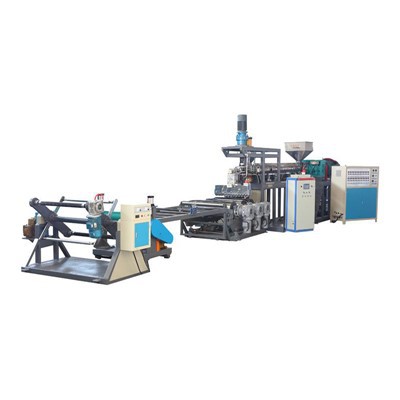
The twin screw extruder is a crucial piece of equipment in the plastics processing industry, known for its high efficiency, good mixing performance, and wide range of applications. One key parameter that significantly influences the performance and functionality of a twin - screw extruder is the screw diameter. As a leading twin screw extruder supplier, we have in - depth knowledge and extensive experience regarding how the screw diameter affects the twin screw extruder.
1. Impact on Processing Capacity
The screw diameter is directly related to the processing capacity of the twin screw extruder. Generally speaking, a larger screw diameter means a larger cross - sectional area of the screw channel. This allows more material to be fed into the extruder per unit time. For example, in large - scale plastic production lines where high - volume output is required, twin screw extruders with larger screw diameters are often preferred.
When the screw diameter is increased, the volume of the material that can be accommodated in the screw channel between the flights also increases. This enables a higher throughput of the material. In a production environment, a manufacturer aiming to produce a large quantity of plastic products, such as plastic pipes or sheets, would benefit from using a twin screw extruder with a larger diameter. Our company offers a variety of twin screw extruders with different screw diameters to meet the diverse processing capacity requirements of our customers. Whether you are a small - scale workshop or a large - scale industrial production facility, we can provide you with the most suitable equipment.
2. Influence on Mixing Performance
Mixing is one of the most important functions of a twin screw extruder, especially when dealing with multi - component materials such as polymer blends, filled polymers, or masterbatches. The screw diameter has a complex impact on the mixing performance.
A larger screw diameter can provide more space for the material to flow and mix. The longer residence time of the material in the extruder due to the larger volume can enhance the mixing effect. However, it is also important to note that the mixing intensity may not always increase linearly with the diameter. In some cases, if the screw design is not optimized for a larger diameter, the material may not be mixed thoroughly.
On the other hand, a smaller screw diameter may result in a higher shear rate under the same screw speed. The high shear rate can break up agglomerates and disperse additives more effectively, which is beneficial for some applications that require high - intensity mixing, such as the production of high - performance composites. Our engineers are highly experienced in designing screws with different diameters to ensure optimal mixing performance for different materials and production requirements. For instance, in the production of TPU Extrusion, we can select the appropriate screw diameter and design to achieve the best mixing of TPU and other additives.
3. Energy Consumption
The screw diameter also has a significant impact on the energy consumption of the twin screw extruder. A larger screw diameter usually requires more power to drive the screw rotation. This is because the larger mass of the screw and the greater amount of material being processed demand more energy to overcome the frictional forces and the resistance of the material flow.
However, in some cases, a larger - diameter extruder can be more energy - efficient in terms of specific energy consumption (energy consumption per unit of output). This is because the larger processing capacity can spread the fixed energy losses (such as motor losses and transmission losses) over a larger amount of product. For example, in a high - volume production scenario, although the total power of a large - diameter twin screw extruder is higher, the energy consumed per kilogram of the extruded product may be lower compared to a small - diameter extruder with a lower throughput.
As a responsible twin screw extruder supplier, we always strive to optimize the energy efficiency of our equipment. We use advanced motor control systems and energy - saving screw designs to reduce the overall energy consumption of our twin screw extruders, regardless of the screw diameter.


4. Product Quality
The quality of the final product is closely related to the screw diameter of the twin screw extruder. In terms of the physical properties of the product, such as mechanical strength, surface finish, and uniformity, the screw diameter plays a vital role.
A well - chosen screw diameter can ensure a more uniform distribution of temperature and pressure within the extruder. This helps to avoid issues such as uneven melting, incomplete mixing, and thermal degradation of the material. For example, in the production of Mat Extruder, a proper screw diameter can guarantee that the plastic material is melted and mixed evenly, resulting in a mat with consistent thickness, density, and mechanical properties.
In the case of producing TPE Automobile Floor Mat Extruder, the screw diameter affects the dispersion of additives in the TPE material. A suitable diameter can ensure that the additives are well - dispersed, which is crucial for the anti - slip, wear - resistant, and other performance characteristics of the automobile floor mat.
5. Cost - effectiveness
When considering the cost - effectiveness of a twin screw extruder, the screw diameter is an important factor. The initial investment cost of a twin screw extruder with a larger screw diameter is generally higher. This includes not only the cost of the extruder itself but also the cost of installation, commissioning, and supporting equipment.
However, in the long - run, a larger - diameter extruder may be more cost - effective for high - volume production. The higher processing capacity can lead to lower production costs per unit of product. Additionally, the better mixing performance and product quality can reduce the rate of defective products, which also contributes to cost savings.
For small - scale production or R & D purposes, a smaller - diameter twin screw extruder may be a more economical choice. It has a lower initial investment, lower energy consumption, and requires less space. We understand the different cost - effectiveness requirements of our customers, and we are committed to providing cost - effective twin screw extruders with the most suitable screw diameters.
Conclusion
In conclusion, the screw diameter of a twin screw extruder has a profound impact on its processing capacity, mixing performance, energy consumption, product quality, and cost - effectiveness. As a professional twin screw extruder supplier, we have the expertise and resources to offer you the best - suited twin screw extruders based on your specific needs. Whether you are dealing with TPU extrusion, mat extrusion, or TPE automobile floor mat extrusion, we can provide you with the optimal screw diameter and extruder design.
If you are interested in our twin screw extruders, please feel free to contact us for more information and to discuss your procurement needs. We look forward to working with you to achieve your production goals.
References
- Tadmor, Z., & Gogos, C. G. (2006). Principles of Polymer Processing. Wiley - Interscience.
- Rauwendaal, C. (2014). Polymer Extrusion. Hanser Publishers.