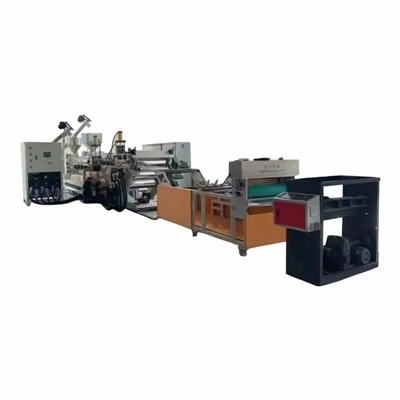
What is the production capacity of a typical sheet extrusion line?
As a seasoned provider of sheet extrusion lines, I'm often asked about the production capacity of a typical setup. The production capacity of a sheet extrusion line is a multifaceted metric influenced by several key factors, and understanding these elements is crucial for businesses aiming to make informed decisions when investing in such equipment.
Key Factors Affecting Production Capacity
Extruder Size and Power
The heart of any sheet extrusion line is the extruder. The size and power of the extruder play a fundamental role in determining the production capacity. Larger extruders with higher power ratings can process more material per unit of time. For instance, a 90mm extruder will generally have a higher throughput compared to a 65mm extruder. The power of the extruder motor also impacts how quickly the polymer can be melted and pushed through the die. A more powerful motor can handle higher viscosities and larger volumes of material, enabling a faster production rate.
Die Design
The die is responsible for shaping the molten polymer into a sheet. The design of the die, including its width and the number of layers it can produce, significantly affects the production capacity. A wider die allows for the production of broader sheets, which can increase the overall output. Additionally, multi - layer dies, such as those found in Multi - layer Sheeting Machine, can produce sheets with multiple layers simultaneously. This not only adds value to the product but also can enhance the production efficiency as multiple layers are formed in one pass.
Cooling System
An efficient cooling system is essential for solidifying the extruded sheet quickly. The faster the sheet cools, the sooner it can be wound or cut, allowing for a higher production rate. Cooling systems can include water baths, air cooling units, or a combination of both. The capacity of the cooling system, measured by its ability to remove heat from the sheet, must be matched to the output of the extruder. If the cooling system is too small, it will become a bottleneck, slowing down the production process.
Line Speed
The line speed, which refers to how fast the sheet moves through the extrusion line, is a direct indicator of production capacity. However, line speed is not solely determined by the extruder's output. It is also influenced by the cooling rate, the ability of the downstream equipment (such as winders and cutters) to handle the moving sheet, and the quality requirements of the final product. For example, if a high - quality finish is required, the line speed may need to be reduced to allow for proper cooling and shaping.
Typical Production Capacity Ranges
The production capacity of a sheet extrusion line can vary widely depending on the factors mentioned above. For a small - scale sheet extrusion line used for producing thin sheets, such as those used in packaging applications, the production capacity might range from 100 to 300 kilograms per hour. These lines are often equipped with smaller extruders and are designed for lower - volume production.
On the other hand, large - scale industrial sheet extrusion lines, which are used for producing thick sheets for construction or automotive applications, can have a production capacity of 1000 kilograms per hour or more. These lines typically feature large extruders, wide dies, and high - capacity cooling systems.
Case Studies
Let's take a look at two different scenarios to illustrate the impact of these factors on production capacity.
Scenario 1: Packaging Sheet Production
A company is using a sheet extrusion line to produce thin PS foam sheets for packaging. They have a 65mm extruder with a relatively low - power motor. The die is designed to produce a single - layer sheet with a width of 1000mm. The cooling system consists of a water bath and an air - cooling unit. With this setup, the line can achieve a production capacity of approximately 150 kilograms per hour. The relatively small extruder and the need for precise cooling to maintain the foam structure limit the production rate. This type of setup is suitable for small - to medium - sized packaging companies with moderate production requirements. For more information on PS foam sheet production, you can check out Ps Foam Sheet Extruder Machine.


Scenario 2: Construction Sheet Production
A large - scale manufacturer is producing multi - layer sheets for construction applications. They have a 120mm extruder with a high - power motor. The die is a multi - layer die capable of producing three - layer sheets with a width of 2000mm. The cooling system is a large - capacity water - cooling system. This setup allows for a production capacity of around 1200 kilograms per hour. The large extruder, multi - layer die, and efficient cooling system work together to achieve a high production rate, making it suitable for large - scale construction projects.
Importance of Production Capacity in Business Decisions
Understanding the production capacity of a sheet extrusion line is crucial for businesses in several ways. Firstly, it helps in determining the return on investment. If a company has high - volume production requirements, investing in a high - capacity extrusion line may be more cost - effective in the long run, despite the higher initial cost. Secondly, production capacity affects the company's ability to meet market demand. A line with insufficient capacity may lead to missed opportunities and lost customers, while an over - sized line can result in unnecessary costs.
Conclusion
In conclusion, the production capacity of a typical sheet extrusion line is a complex metric influenced by multiple factors, including extruder size and power, die design, cooling system, and line speed. By carefully considering these factors, businesses can select the right sheet extrusion line to meet their production needs. Whether you are a small - scale packaging company or a large - scale construction material manufacturer, understanding production capacity is essential for making informed investment decisions.
If you are interested in learning more about our sheet extrusion lines or would like to discuss your specific production requirements, we invite you to reach out for a detailed consultation. Our team of experts is ready to assist you in finding the perfect solution for your business.
References
- "Extrusion Handbook" by Hanser Publishers
- "Plastics Extrusion Technology" by Christopher Rauwendaal