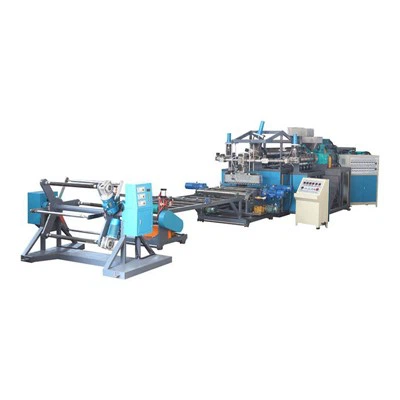
Hey there! As a supplier of single screw extruders, I've seen firsthand how various factors can have a huge impact on the extrusion quality. In this blog, I'm gonna break down these factors for you, so you can get the most out of your single screw extruder.
1. Screw Design
The screw is like the heart of a single screw extruder. Its design plays a crucial role in determining the extrusion quality.
Compression Ratio
The compression ratio of the screw is the ratio of the volume of the feed section to the volume of the metering section. A higher compression ratio can lead to better melting and mixing of the polymer. For example, if you're processing a highly viscous polymer, a screw with a higher compression ratio can help to break down the polymer chains and ensure a more uniform melt. However, if the compression ratio is too high, it can cause excessive shear heating, which may degrade the polymer.
Screw Length - Diameter Ratio (L/D)
The L/D ratio also matters a lot. A longer screw provides more residence time for the polymer in the extruder, allowing for better melting, mixing, and homogenization. But a very long screw can increase the pressure drop and energy consumption. Generally, for most applications, an L/D ratio between 20:1 and 30:1 is commonly used. If you need a more precise and high - quality extrusion, you might consider a screw with a higher L/D ratio.
2. Polymer Properties
The properties of the polymer being extruded are another key factor.
Viscosity
Polymers with different viscosities require different processing conditions. High - viscosity polymers need more energy to be melted and extruded. If the extruder can't provide enough power, the polymer may not melt completely, resulting in uneven extrusion. On the other hand, low - viscosity polymers are easier to process but may require more precise control of the extrusion speed to avoid issues like sagging or dripping.
Melting Point
The melting point of the polymer determines the temperature settings of the extruder. If the temperature is too low, the polymer won't melt properly, and you'll end up with a poor - quality product. If the temperature is too high, the polymer may degrade, changing its physical and chemical properties. For instance, some polymers like PVC are very sensitive to high temperatures and can release harmful gases when over - heated.
3. Temperature Control
Temperature is a critical factor in extrusion quality.
Barrel Temperature
The barrel of the extruder is divided into several heating zones. Each zone needs to be set at the appropriate temperature to ensure proper melting and flow of the polymer. The temperature in the feed zone is usually lower to prevent the polymer from sticking to the screw. As the polymer moves towards the metering section, the temperature gradually increases to fully melt the polymer. Inaccurate temperature control in any of these zones can lead to problems such as poor mixing, uneven melting, or even polymer degradation.
Die Temperature
The die temperature also affects the final shape and quality of the extruded product. A proper die temperature helps the polymer to flow smoothly through the die and maintain its shape after extrusion. If the die temperature is too low, the polymer may solidify too quickly, causing surface defects or cracking. If it's too high, the product may deform or have a rough surface.
4. Extrusion Speed
The extrusion speed, or the rotational speed of the screw, has a direct impact on the quality of the extruded product.
Output Rate
A higher extrusion speed generally means a higher output rate. But if the speed is too high, the polymer may not have enough time to melt and mix properly. This can result in a product with inconsistent density, poor mechanical properties, and surface imperfections. On the other hand, a very low extrusion speed can be inefficient and may cause the polymer to over - stay in the extruder, leading to degradation.
Shear Rate
The extrusion speed also affects the shear rate applied to the polymer. A high shear rate can help to break down the polymer chains and improve mixing, but it can also generate a lot of heat. Excessive heat can cause polymer degradation and affect the quality of the product. So, finding the right balance in extrusion speed is crucial.
5. Additives and Fillers
Many polymers are mixed with additives and fillers to improve their properties.
Lubricants
Lubricants are often added to reduce the friction between the polymer and the screw and barrel surfaces. This can improve the flow of the polymer and prevent it from sticking. However, if too much lubricant is added, it can cause the polymer to slip on the screw, reducing the conveying efficiency and affecting the extrusion quality.


Reinforcing Fillers
Fillers like glass fibers or carbon fibers can enhance the mechanical properties of the polymer. But they also increase the viscosity of the polymer melt and can cause wear on the screw and barrel. Proper dispersion of these fillers is essential to ensure uniform properties throughout the extruded product. If the fillers are not well - dispersed, it can lead to weak spots in the product.
6. Machine Maintenance
Regular maintenance of the single screw extruder is vital for consistent extrusion quality.
Screw and Barrel Wear
Over time, the screw and barrel can wear out due to the high - pressure and high - temperature environment during extrusion. Worn - out screw and barrel surfaces can lead to poor polymer conveying, uneven melting, and reduced mixing efficiency. Regular inspection and replacement of these components when necessary can help to maintain the extrusion quality.
Sealing and Leakage
Proper sealing of the extruder is important to prevent polymer leakage and maintain the pressure inside the barrel. Leakage can not only waste materials but also affect the extrusion process by reducing the pressure and causing inconsistent flow.
7. Die Design
The die is the final component that shapes the extruded polymer.
Die Geometry
The shape and size of the die opening determine the cross - sectional shape of the extruded product. A well - designed die should ensure a uniform flow of the polymer across the die opening. Any irregularities in the die geometry can lead to non - uniform extrusion, such as thickness variations in a sheet or uneven wall thickness in a tube.
Die Land Length
The die land length, which is the length of the straight section at the end of the die, affects the pressure distribution and the final shape of the extruded product. A longer die land can provide more time for the polymer to relax and form a more stable shape, but it can also increase the pressure drop.
If you're in the market for a high - quality single screw extruder, we've got you covered. We offer a wide range of single screw extruders, including the Floor Mat Forming Machine, Foot Pad Blister Sheet Machine, and Tpu Extrusion Machine. Our machines are designed to provide excellent extrusion quality and are backed by our experienced technical support team. If you're interested in learning more or discussing your specific requirements, don't hesitate to reach out to us for a procurement discussion.
References
- "Extrusion: The Definitive Processing Guide and Handbook" by Christopher Rauwendaal
- "Plastics Extrusion Technology" by Allan A. Griff