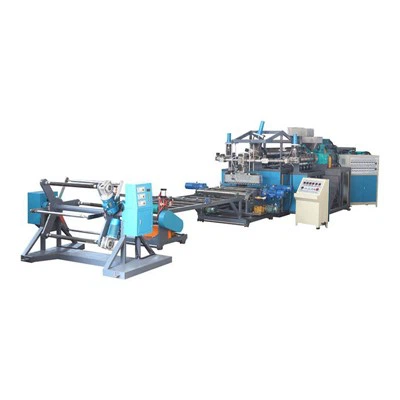
Hey there! As a supplier of Heel Patch Extrusion Machines, I'm super excited to share with you the main components of these awesome machines. You know, heel patch extrusion machines play a crucial role in the production of heel patches, which are widely used in the footwear industry and for medical purposes. So, let's dive right in and take a closer look at what makes these machines tick.
Screw and Barrel Assembly
The screw and barrel assembly is like the heart of the heel patch extrusion machine. The screw rotates inside the barrel, and its main job is to convey, compress, and melt the raw materials. There are different types of screws, such as single - screw and twin - screw. Single - screw extruders are more common and cost - effective for simple applications. They work by pushing the raw material forward through the barrel using the rotation of the screw.
Twin - screw extruders, on the other hand, offer better mixing and higher throughput. They have two intermeshing screws that rotate in the same or opposite directions. This allows for more efficient melting and homogenization of the raw materials, especially when dealing with complex formulations. The barrel is usually made of high - quality steel and is designed to withstand high temperatures and pressures. It has heating and cooling zones to control the temperature of the raw materials during the extrusion process.
Hopper
The hopper is where the raw materials are loaded into the machine. It's usually located at the top of the extruder. The hopper can be designed in different shapes and sizes depending on the type and quantity of raw materials being used. Some hoppers have a simple open - top design, while others are equipped with a lid to prevent dust and contaminants from entering.
There are also advanced hoppers that come with features like level sensors. These sensors can detect the amount of raw material in the hopper and send a signal to the control system when it's time to refill. This helps to ensure a continuous and smooth extrusion process.
Heating and Cooling System
As I mentioned earlier, the temperature control is crucial in the extrusion process. The heating and cooling system of the heel patch extrusion machine is responsible for maintaining the right temperature throughout the barrel. The heating elements, usually electric heaters, are installed along the barrel. They heat the raw materials to the melting point, which varies depending on the type of polymer being used.
The cooling system, on the other hand, is used to cool down the barrel when necessary. This can be achieved through water - cooled jackets or air - cooled fins. The cooling process helps to prevent overheating of the raw materials, which can lead to degradation and affect the quality of the final product. The control system monitors the temperature of the barrel and adjusts the heating and cooling elements accordingly.
Die Head
The die head is the part of the machine where the molten raw material is shaped into the desired form of the heel patch. It's located at the end of the barrel. The die head has a specific design that determines the cross - section and shape of the extruded product. For heel patches, the die head is usually designed to produce a thin, flat sheet or a specific shape that matches the requirements of the heel.
The die head can be made of different materials, such as stainless steel or brass. It's important to choose a material that is resistant to corrosion and wear. The die head also needs to be precisely machined to ensure a uniform and high - quality extrusion. Some die heads are adjustable, which allows for flexibility in changing the shape and size of the heel patches.
Take - off Unit
The take - off unit is responsible for pulling the extruded heel patches out of the die head at a constant speed. It usually consists of a set of rollers or belts. The rollers or belts grip the extruded product and move it forward. The speed of the take - off unit needs to be carefully coordinated with the extrusion speed to ensure a consistent thickness and quality of the heel patches.
There are different types of take - off units available. Some are simple manual units, while others are fully automated with speed control and tension adjustment features. The automated take - off units are more efficient and can produce a higher quality product with less human intervention.
Cutting Unit
Once the heel patches are extruded and pulled out by the take - off unit, they need to be cut into the desired length. The cutting unit is used for this purpose. It can be a simple blade cutter or a more advanced rotary cutter. The blade cutter uses a sharp blade to cut through the extruded product, while the rotary cutter uses a rotating blade for a more precise and clean cut.
The cutting unit can be programmed to cut the heel patches at specific intervals. This allows for the production of heel patches of different lengths according to the customer's requirements.
Control System
The control system is the brain of the heel patch extrusion machine. It manages and monitors all the functions of the machine, including the screw speed, temperature, pressure, and the operation of the different units. The control system can be a simple manual control panel or a more advanced computer - based system.
A computer - based control system offers more flexibility and precision. It allows operators to set and adjust the parameters of the extrusion process easily. It also provides real - time monitoring and data logging capabilities. This means that operators can track the performance of the machine, identify any issues, and make adjustments as needed.
Other Optional Components
There are also some optional components that can be added to the heel patch extrusion machine to enhance its functionality. For example, a mixer can be installed before the hopper to pre - mix the raw materials. This helps to ensure a more homogeneous mixture and better quality of the final product.
Another optional component is a vacuum system. A vacuum system can be used to remove air bubbles and moisture from the raw materials during the extrusion process. This improves the strength and appearance of the heel patches.
If you're interested in other types of extrusion machines, we also offer Hydrogel Dressing Extruder and Hotmelt Adhesive Extrusion Machine. These machines have similar components but are designed for different applications.
If you're in the market for a Heel Patch Extrusion Machine, we're here to help. Our machines are built with high - quality components and advanced technology to ensure reliable and efficient operation. Whether you're a small - scale manufacturer or a large - scale production facility, we can provide you with the right solution for your needs.


If you have any questions or would like to discuss your specific requirements, feel free to get in touch with us. We're always happy to have a chat and help you find the best heel patch extrusion machine for your business.
References
- "Extrusion of Polymers: Theory and Practice" by Christopher Rauwendaal
- "Handbook of Plastic Extrusion Technology" by James F. Carley