


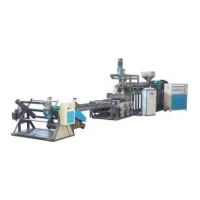

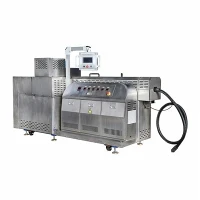

Jelly Cup Thermoforming Machine
The Jelly Cup Thermoforming Machine converts thermoplastic sheet into disposable jelly cups through heating, forming, cutting, and finished-cup handling. It is suitable for jelly cups, pudding cups, and similar portion-sized food containers. Machine configuration is matched to cup dimensions, sheet material, wall thickness, mold layout, target output, and packing requirements.
Key Production Advantages
Dimensional Control
Heating and forming settings are adjusted to the cup design. Rim diameter, cup height, base dimensions, and wall distribution are checked against approved samples.
Coordinated Production
Sheet feeding, heating, forming, and cutting follow a defined sequence. Automatic stacking and finished-cup collection can be included in the selected configuration.
Product-Specific Tooling
Mold dimensions and cavity layout are matched to the cup profile and forming area. This allows production planning around specified cup sizes and output requirements.
Applications
Jelly Cups
Disposable jelly cups in specified diameters, heights, capacities, and profiles.
Pudding Cups
Portion-sized pudding containers matched to the required dimensions, sheet material, and packing method.
Dessert Containers
Selected dessert cups and similar food packaging containers, subject to forming depth, mold layout, and handling requirements.
Technical Specifications
|
Parameter |
Reference value |
|
Applicable sheet materials |
PP, PS, PET |
|
Sheet thickness |
0.3–1.8 mm |
|
Maximum sheet width |
660 mm |
|
Maximum forming area |
650 × 300 mm |
|
Maximum forming depth |
125 mm |
|
Forming speed |
10–30 cycles/min |
|
Air pressure |
0.6–0.8 MPa |
|
Air consumption |
2.0 m³/min |
|
Water consumption |
0.5 m³/h |
|
Rated power |
98 kW |
|
Heating power |
78 kW |
|
Power supply |
380 V, 50 Hz, three-phase |
|
Machine dimensions |
7,000 × 2,000 × 3,100 mm |
Thermoforming Process
Sheet Feeding
The feeding system advances the sheet into the heating section. Feed width and positioning are matched to the sheet specification and mold layout.
Heating and Forming
The heating system brings the sheet to a suitable forming temperature. The mold establishes the cup profile, depth, and base geometry according to the product drawing.
Cutting and Collection
The cutting station separates formed cups from the surrounding sheet. Finished products are transferred to the configured stacking or collection system.
Cup Design and Tooling
Cup Dimensions
Rim diameter, cup height, base diameter, wall profile, and rim shape determine mold design and forming space.
Mold Cavity Layout
Cavity count determines how many cups are formed per cycle. The layout must fit the effective forming area and provide suitable spacing for forming and cutting.
Mold Changeover
For multiple cup sizes, confirm mold mounting dimensions, changeover procedures, and the adjustments required for each product specification.
Material and Forming Quality
Sheet Compatibility
PP, PS, and PET can be assessed according to the selected configuration, resin grade, sheet thickness, and cup design. Material suitability should be confirmed before production.
Wall Thickness Distribution
Cup depth, draft angle, heating conditions, and forming settings affect material distribution. Sample trials help establish suitable settings for the target cup.
Finished-Cup Inspection
Check rim flatness, base stability, dimensional accuracy, wall distribution, and cutting-edge quality against the agreed product specification.
Production Capacity Planning
Operating Speed
Output depends on cycle speed, mold cavity count, material behavior, and operating efficiency. Rated speed should be evaluated using the intended cup design.
Output Calculation
Hourly output = cavities per cycle × cycles per minute × 60 × operating efficiency
Packing Capacity
Stack direction, cups per stack, collection method, and packing speed should be included in the production plan.
Custom Configuration
Cup and Mold Design
Configuration can be matched to cup dimensions, forming depth, cavity count, and mold layout.
Sheet Specifications
Material type, sheet width, thickness, and roll dimensions determine feeding and heating requirements.
Automation and Utilities
Feeding, cutting, stacking, collection, electrical supply, compressed air, and cooling requirements are confirmed against the production layout.
Quality Control and Acceptance
Sample Verification
Measure finished cups against approved drawings for diameter, height, base dimensions, wall distribution, and rim condition.
Machine Function Testing
Acceptance checks cover sheet feeding, heating control, forming, cutting, and the operation of included handling systems.
Technical Documentation
Confirm the machine specification, electrical requirements, operating instructions, spare parts list, and acceptance criteria before shipment.
Installation and Technical Support
Site Preparation
Confirm floor space, equipment access, electrical supply, compressed air, cooling requirements, and downstream connections before installation.
Commissioning and Training
Commissioning covers operating procedures, parameter adjustment, mold installation, routine inspection, and safe operation.
Technical Assistance
Remote technical support can assist with operating questions and troubleshooting. On-site service arrangements are confirmed according to installation location and project scope.
Frequently Asked Questions
Hot Tags: jelly cup thermoforming machine, China jelly cup thermoforming machine manufacturers, suppliers, factory, Disposable Plastic Cup Thermoforming Machine, hydraulic injection molding press, industrial plastic injection unit, molding machine, rotational molding machine, servo injection molding machine
You Might Also Like


Send Inquiry