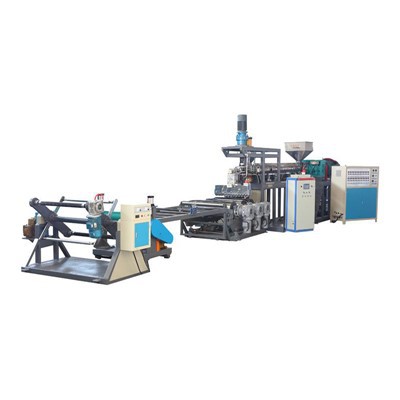
Can a twin screw extruder be used for the production of foams?
Foam materials have a wide range of applications in various industries, including packaging, construction, automotive, and consumer goods. Their unique properties such as low density, high insulation, and good cushioning make them highly desirable. The question of whether a twin screw extruder can be used for foam production is an important one for manufacturers looking to expand their product offerings or improve production efficiency. As a twin screw extruder supplier, I will explore this topic in detail.
Understanding Twin Screw Extruders
Twin screw extruders are versatile machines widely used in the plastics and polymer processing industries. They consist of two parallel screws rotating within a barrel. The screws can rotate in the same direction (co - rotating) or in opposite directions (counter - rotating). This design allows for better mixing, kneading, and conveying of the material compared to single - screw extruders.
The twin screw extruder's ability to precisely control temperature, pressure, and residence time of the material in the barrel makes it suitable for a variety of processes. It can handle different types of polymers, additives, and fillers, and can be customized with different screw configurations and barrel sections to meet specific processing requirements.


Foam Production Basics
Foam production involves the creation of gas bubbles within a polymer matrix. There are two main types of foaming agents: physical and chemical. Physical foaming agents, such as carbon dioxide or nitrogen, are injected into the polymer melt under pressure. When the pressure is released, the gas expands, creating bubbles in the polymer. Chemical foaming agents, on the other hand, decompose at high temperatures to release gas, which then forms bubbles in the polymer.
The key factors in foam production include the choice of polymer, the type and amount of foaming agent, the processing temperature, pressure, and the cooling rate. These factors determine the cell structure (size, shape, and distribution) of the foam, which in turn affects the mechanical, thermal, and aesthetic properties of the final product.
Using Twin Screw Extruders for Foam Production
Mixing of Components
One of the main advantages of using a twin screw extruder for foam production is its excellent mixing capabilities. In foam production, it is crucial to evenly disperse the foaming agent throughout the polymer matrix. The twin screw extruder's intermeshing screws can effectively break up agglomerates of additives and ensure a homogeneous mixture. This is especially important when using chemical foaming agents, as uneven distribution can lead to inconsistent cell structure and poor foam quality.
Precise Control of Processing Conditions
Twin screw extruders offer precise control over temperature, pressure, and residence time. For foam production, maintaining the right temperature is critical. If the temperature is too low, the foaming agent may not activate properly, resulting in insufficient foaming. If the temperature is too high, the polymer may degrade, and the foam structure may collapse. The twin screw extruder can be equipped with multiple heating and cooling zones, allowing for accurate temperature control along the length of the barrel.
Pressure control is also essential in foam production. When using physical foaming agents, the pressure must be maintained high enough to keep the gas dissolved in the polymer melt until it reaches the die, where the pressure is suddenly released to initiate foaming. The twin screw extruder can generate and maintain the required pressure, ensuring proper gas dissolution and controlled foaming.
Compatibility with Different Polymers
Twin screw extruders can process a wide range of polymers, including polypropylene (PP), polyethylene (PE), polystyrene (PS), and thermoplastic elastomers (TPE). This makes them suitable for producing different types of foams with varying properties. For example, TPE foams are known for their flexibility and resilience, and can be used in applications such as automotive floor mats. Our TPE Automobile Floor Mat Extruder is specifically designed to meet the requirements of TPE foam production for this application.
Examples of Foam Products Produced with Twin Screw Extruders
Packaging Foams
Polystyrene (PS) foam is commonly used in packaging applications due to its low cost, good insulation properties, and shock - absorbing capabilities. Twin screw extruders can be used to produce PS foam sheets or beads. The extruder can mix the PS resin with a physical or chemical foaming agent, and then extrude the mixture through a die to form the desired foam product.
Thermoplastic Polyurethane (TPU) Foams
TPU foams have excellent abrasion resistance, flexibility, and elasticity, making them suitable for applications such as shoe soles, sports equipment, and medical devices. Our TPU Extrusion solutions using twin screw extruders can produce high - quality TPU foams with consistent cell structure and properties.
TPE Foams
As mentioned earlier, TPE foams are widely used in automotive and consumer goods applications. The TPE Extrusion process using twin screw extruders can produce TPE foams with different hardness levels and cell structures, depending on the specific requirements of the application.
Challenges and Considerations in Foam Production with Twin Screw Extruders
Die Design
The die design is crucial in foam extrusion. A well - designed die can ensure uniform flow of the foaming polymer melt and proper expansion of the foam. The die geometry, such as the shape and size of the die opening, can affect the cell structure and the final dimensions of the foam product. Specialized die designs may be required for different types of foams and applications.
Degassing and Venting
During the extrusion process, it is important to remove any volatile components or air from the polymer melt. Twin screw extruders can be equipped with venting ports to allow for degassing. Proper venting is necessary to prevent the formation of voids or defects in the foam product.
Process Optimization
Foam production is a complex process that requires careful optimization of various parameters. The choice of screw configuration, barrel temperature profile, screw speed, and foaming agent dosage all need to be optimized to achieve the desired foam properties. This may involve some trial - and - error and process development work.
Conclusion
In conclusion, twin screw extruders can be effectively used for the production of foams. Their excellent mixing capabilities, precise control of processing conditions, and compatibility with different polymers make them a suitable choice for a wide range of foam applications. However, successful foam production with twin screw extruders requires careful consideration of factors such as die design, degassing, and process optimization.
If you are interested in exploring foam production using twin screw extruders or have any questions about our twin screw extruder products, we invite you to contact us for further discussion. Our team of experts is ready to provide you with customized solutions and technical support to help you achieve your production goals.
References
- "Extrusion of Plastics: Theory and Practice" by James L. White and Helmut Potente
- "Foamed Plastics" by C. P. Park
- Various industry research reports on polymer processing and foam technology.